
Acrylic Painting Costs Explained: What You’ll Rebuy
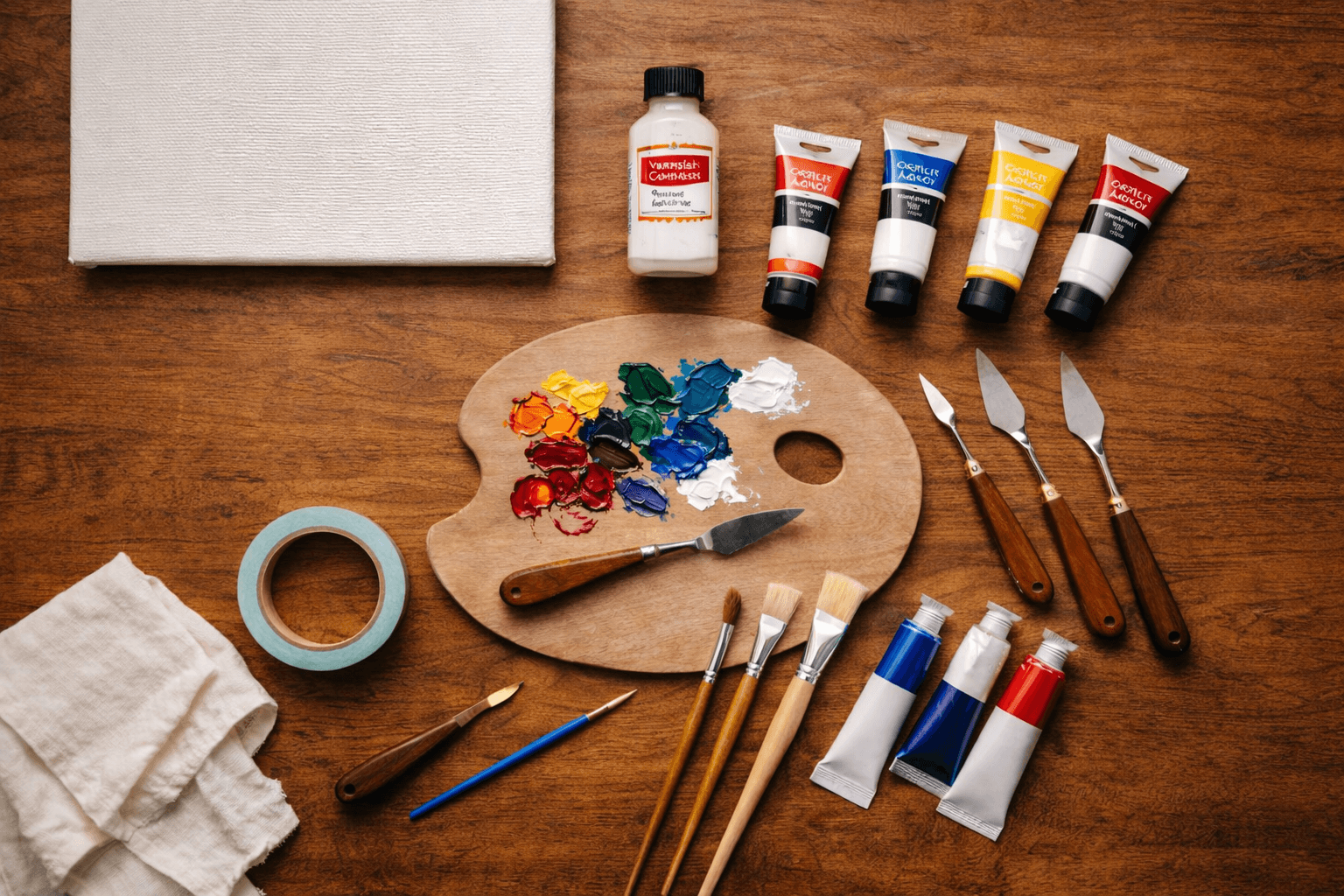
Acrylic Painting Costs Explained: What You’ll Rebuy
Most hobbies have one big problem: you can spend a lot of money before you even start.
Acrylic painting is the opposite—until it isn’t.
You can begin with a small kit and make real progress fast. But once you paint a few times, you’ll notice the “quiet costs”: canvas refills, extra colors, paper towels, brush soap. None of it is dramatic on its own. Together, it’s what turns acrylic painting into a monthly hobby budget.
This guide is built around a simple idea:
Split your supplies into two buckets:
- Stuff you buy once (and keep using)
- Stuff you’ll keep rebuying (the real ongoing cost)
Then you can decide how far you want to take the hobby: Starter → Regular → Pro.
The 30-second budget mindset
Ask yourself three questions:
- Do I want to practice a lot? (then refills matter more than fancy tools)
- Do I care about the final look? (then surfaces + varnish matter later)
- Do I hate mess? (then regular-level “process tools” will save you)
If you answer those honestly, you’ll avoid 80% of unnecessary spending.
Bucket #1: “Buy once” supplies
These are the items you’ll keep for a long time. They’re not glamorous, but they’re the foundation.
Starter (one-time)
- Acrylic paint set
- Brush set
- Canvas panels / canvas pad
- Palette
Starter goal: start painting immediately, not building a perfect studio.
Bucket #2: “You’ll rebuy this” supplies (the real monthly cost)
This is where acrylic painting surprises beginners. You don’t notice it on day one, but after a few sessions you do.
Regular (monthly refills)
- Cup + paper towels
- Extra paint colors (refill)
- Canvas boards (refill pack)
- Brush cleaner soap
If you paint regularly, these become your default “running costs.”
The Regular setup: what makes painting easier
Regular level isn’t about being “better.” It’s about removing friction: cleaner edges, smoother mixes, better prep, less frustration.
Regular (one-time upgrades)
- Acrylic medium (gloss/matte)
Helps with flow, transparency, and finish. Also makes cheap paint behave better. - Standing easel
Changes posture and makes longer sessions easier. - Palette knives
Great for mixing and texture—also saves brushes from abuse. - Gesso primer
Improves surface quality and paint control (especially on cheap boards). - Artist tape
For clean borders, sharp lines, and less “muddy” edges. - Apron or paint smock
Not essential… until you ruin one outfit. - Detail brush set
For finishing touches without destroying your main brushes.
Regular goal: paint more often because the setup stops being annoying.
The Pro setup: what you buy when you care about the final piece
Pro level is where you spend money to improve outcomes: better surfaces, better paint, and protecting the finished work.
Pro (one-time)
- Stretched canvases
More “finished” look and usually a nicer painting experience. - High-quality paint tubes
Better pigment, smoother blending, more consistent color. - Varnish
Seals and protects the piece (and can improve the final look). - Online acrylic painting course
This is the “shortcut” purchase—skill improvements usually beat gear upgrades.
Pro goal: make pieces you’d actually hang, gift, or sell.
A simple “what should I buy next?” decision guide
If you’ve done a few paintings and want to upgrade, don’t guess—choose based on your problem:
- My colors look dull / chalky → upgrade to high-quality paint tubes or add an acrylic medium
- My paintings feel messy → add artist tape + palette knives
- My surface feels bad → use gesso primer or switch to stretched canvases
- My brushes get ruined → add brush cleaner soap + stop mixing paint with brush tips
- I want faster improvement → do an online course before buying more tools
The most common acrylic painting money traps
Acrylic is beginner-friendly, so it’s easy to “collect” supplies.
Try to avoid these early:
- Buying too many brushes (you’ll use 4–6 most of the time)
- Buying stretched canvases for practice (use boards/pads for reps)
- Buying every color instead of learning mixing (refill only what you truly use)
A good rule: paint 5 times before you expand your kit.
Your preferences become obvious after that.
Use the Acrylic Painting Cost Calculator
If you want a realistic estimate, set up Acrylic Painting inside Hobby Cost Calculator like this:
- Starter / Regular / Pro
- Split costs into one-time vs monthly refills
- Toggle Add my prices to match what you’ll actually buy locally
That way you’ll know your real cost: not just the first shopping cart, but the ongoing refills too.
👉 Try the Acrylic Painting Cost Calculator here
FAQ
Is acrylic painting expensive?
It doesn’t have to be. The expensive part is usually repeat buying (canvas + paint refills). Starter can stay simple.
What should I buy first if I’m on a budget?
Paint set + a small brush set + canvas pad/boards + a palette. Start painting fast.
What’s the smartest “upgrade”?
If your goal is better results: a good course or better paint usually beats buying more tools.
Do I need varnish?
Not for practice. It’s for pieces you want to protect long-term.
Related posts