Hiking Cost: Gear Checklist + Benefits
Hiking Cost: Gear Checklist + Benefits
Hiking is one of the easiest hobbies to start… until you realize the “small stuff” adds up. The good news: you can keep hiking affordable if you buy the right essentials first, then upgrade based on what actually annoys you after a few hikes.
This post breaks down hiking cost by level (Starter → Regular → Pro) and by spending type (one-time vs monthly). It’s a practical checklist—not a gear flex.
Why hiking is worth it
If you hike even once a week for a month, you’ll probably notice a few changes:
- Better endurance without feeling like “workout time”
- Leg + core strength (especially from elevation and uneven ground)
- Lower stress (time away from screens, noise, and constant notifications)
- Better sleep on days you move outdoors
- A hobby that scales: 60 minutes or 6 hours, solo or social
And unlike a lot of hobbies, hiking can stay low-cost once your basics are sorted.
Hiking cost in a sentence
Most of your cost is upfront (shoes + basics), then you’ll have a small monthly spend (sun protection, snacks, bug spray, fees depending on location).
That’s why separating one-time and monthly costs makes budgeting easier.
Starter hiking gear (safe + comfortable for day hikes)
Starter is for easy trails and short day hikes—this is the “I want to start this weekend” tier.
One-time purchases (Starter)
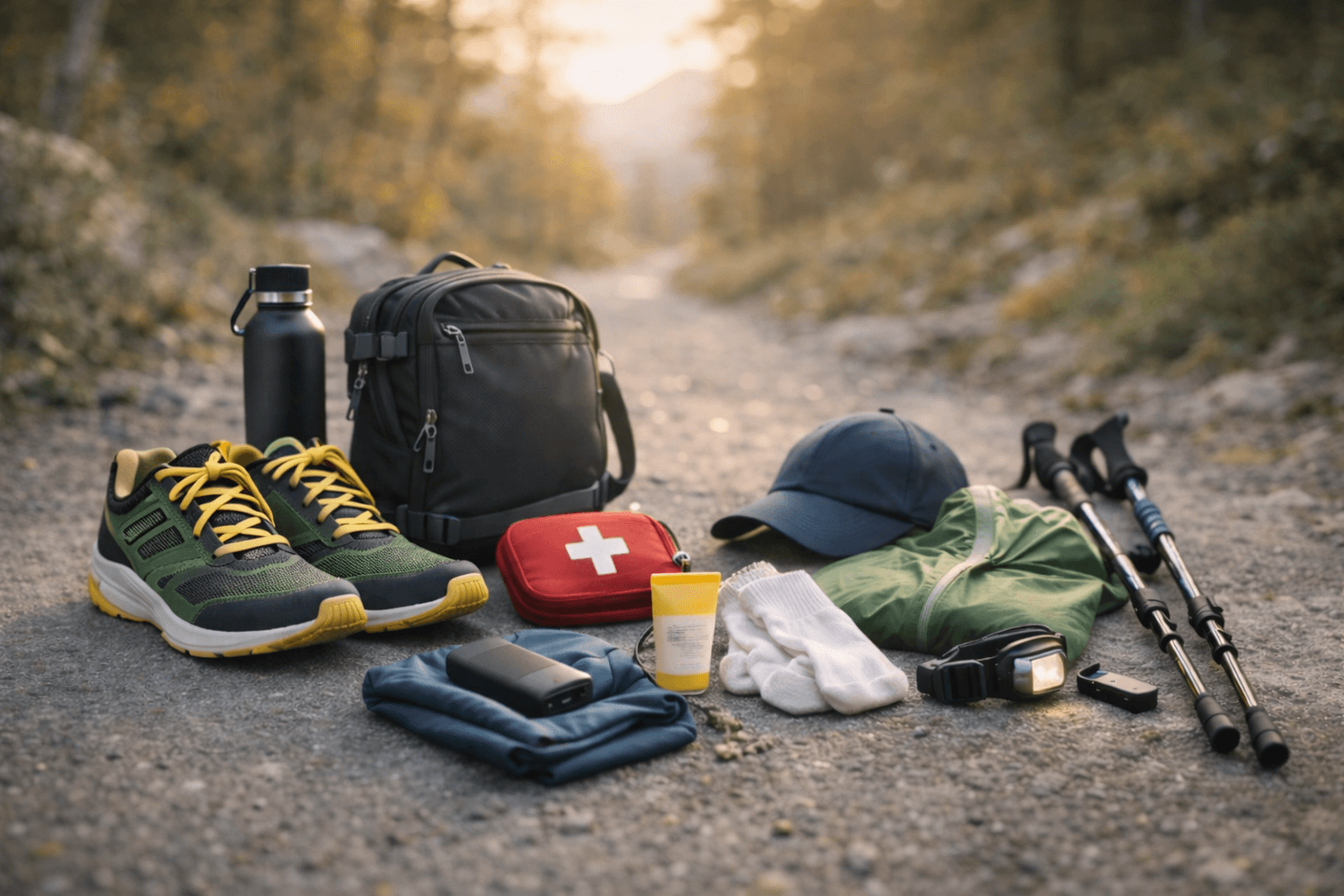
- Hiking shoes / trail shoes
This is the #1 item that decides whether hiking feels good or miserable. Blisters can kill the hobby fast. - Backpack
Even a simple daypack makes hiking more comfortable than cramming pockets. - Water bottle or hydration bladder
Bottles are simpler to clean; bladders make sipping easier while walking.
Monthly costs (Starter)
- Sunscreen
You won’t think it matters… until you get burned once. Then it becomes permanent.
Regular hiking gear
Regular is where hiking becomes enjoyable in more conditions: hot sun, light rain, buggy trails, longer routes.
One-time purchases (Regular)
- Hat / cap
Small purchase, big comfort. - Moisture-wicking hiking socks
Great socks are basically blister insurance. - First aid kit
Doesn’t need to be huge—just enough for small cuts and hot spots. - Light rain jacket
The difference between a fun hike and a miserable one. - Trekking poles
Worth it if you have long downhills, uneven terrain, or sensitive knees. - Headlamp
You don’t plan to be out late… until you are. - Power bank
Especially if you use your phone for photos + navigation.
Monthly costs (Regular)
- Bug spray
Some trails are fine. Some are mosquito festivals. - Snacks / trail mix
This is the sneaky monthly cost people forget. - Anti-chafe balm
If you’ve never needed it, congrats. If you have, you’ll never skip it again.
Pro hiking gear (longer hikes, tougher conditions)
Pro doesn’t mean “luxury.” It means you hike enough that durability, navigation, and self-sufficiency start to matter.
One-time purchases (Pro)
- Portable water filter
Useful on longer routes where refilling is possible (and nice as a backup). - Navigation
Depends on your trail style: offline maps setup, a GPS tool, or something dedicated. - Day hike clothing layers
Weather changes fast on trails. Layers save the day: base + mid + outer. - Hiking watch
Not required, but great for tracking distance, elevation, heart rate, and pacing.
Monthly costs (Pro)
- National park pass / trail fees
Location-dependent, but it adds up if you hike often.
Where beginners usually overspend
Hiking gear marketing is intense. Here’s where money often disappears early:
- Buying pro-level jackets before doing 3–5 hikes
- Overpaying for huge backpacks when you’re doing day hikes
- Buying gadgets instead of fixing basics (shoes, socks, hydration, layers)
A safe strategy is simple: buy Starter gear, hike a few times, then upgrade what actually bothers you.
Hiking shoes vs trail shoes
Your list starts with hiking shoes / trail shoes for a reason: they’re usually the best first purchase.
- Trail shoes: lighter, comfy, great for dry day hikes
- Hiking shoes/boots: more protection, better for wet/rocky terrain and heavier loads
If you’re unsure and your trails are mostly easy: start with trail shoes.
The hidden monthly costs
Even “cheap” hiking has repeat costs:
- sunscreen
- bug spray
- snacks
- anti-chafe balm
- trail fees (if applicable)
They’re not huge individually, but they’re what turns hiking from a one-time purchase into an actual ongoing hobby.
Try the Hiking Cost Calculator
If you want a personalized estimate, use Hobby Cost Calculator and set hiking up by:
- Starter / Regular / Pro
- One-time vs Monthly
- Toggle Add my prices to replace estimates with your local store pricing
That way your budget reflects your hiking style—not someone else’s.
👉 Try the Hiking Cost Calculator here
FAQ
How much does hiking cost to start?
Most cost is upfront (shoes + basics). Monthly costs are usually sunscreen and snacks, plus bug spray depending on location.
Do I need trekking poles?
Not required, but they’re a great value upgrade for downhills and stability.
What’s the best first purchase?
Footwear and socks. If your feet aren’t happy, hiking won’t stick.
Related posts